

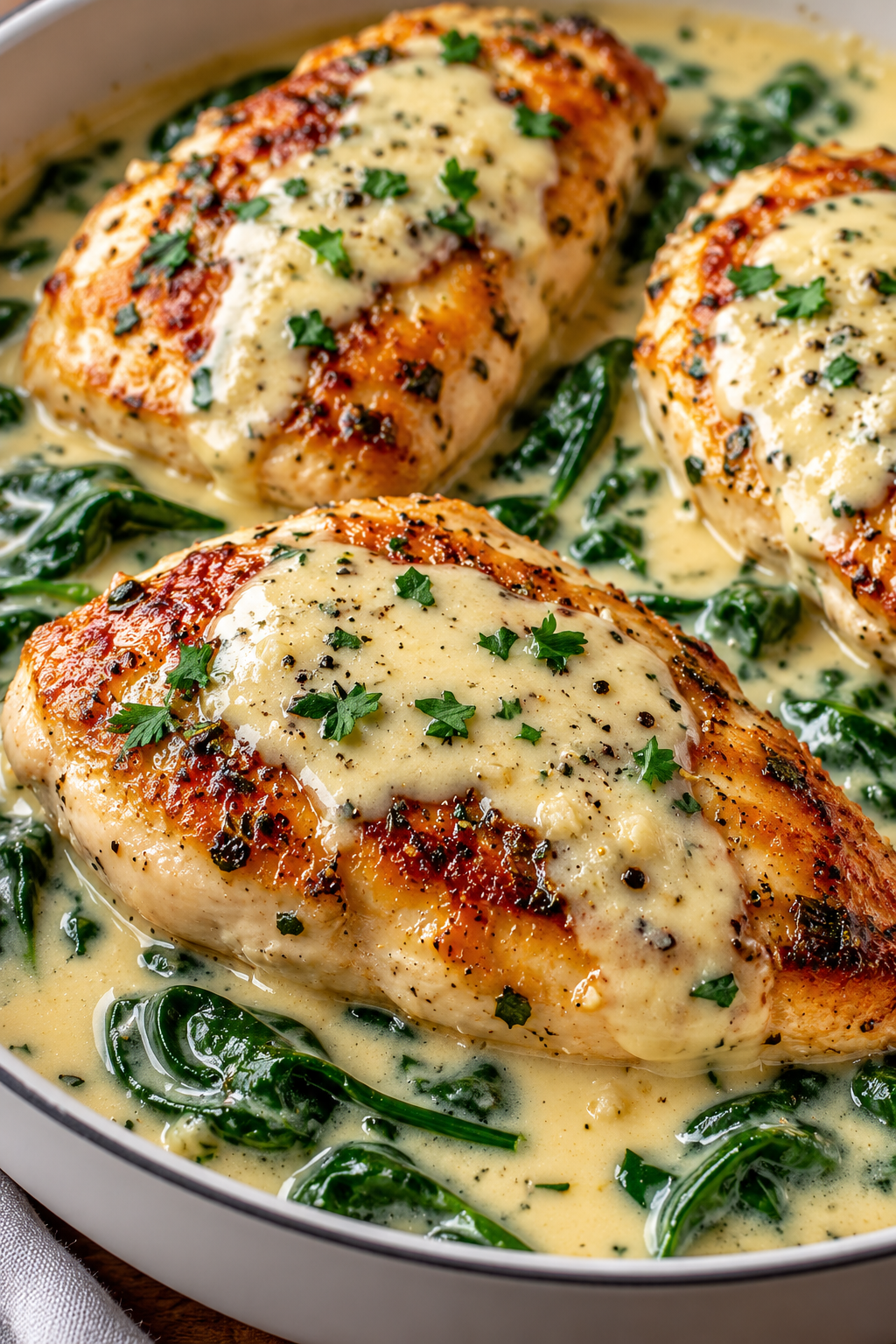
Chicken Florentine : The Ultimate Creamy Chicken Dinner
Introduction
Chicken Florentine is a comforting, restaurant-style dinner that combines tender, golden-brown chicken breasts with a rich, creamy spinach sauce. Made with garlic, Parmesan cheese, butter, and cream, this classic dish delivers delicious flavor in every bite while remaining simple enough to prepare on a busy weeknight.
The combination of juicy chicken, fresh spinach, and a silky garlic cream sauce makes this recipe a favorite for anyone who enjoys hearty, satisfying meals. The spinach adds freshness and color, while Parmesan cheese brings a savory depth that perfectly complements the tender chicken.
One of the best things about Chicken Florentine is its versatility. You can serve it with mashed potatoes, rice, pasta, or crusty bread to soak up every bit of the delicious sauce. It is elegant enough for a special dinner but easy enough to make when you want something comforting at home.
Whether you’re cooking for your family, preparing a romantic dinner, or looking for a new chicken recipe to add to your weekly meal rotation, this creamy Chicken Florentine is an excellent choice.
What Is Chicken Florentine?
Chicken Florentine is a chicken dish prepared with spinach and often served with a creamy sauce. The word Florentine refers to a style of cooking associated with spinach, inspired by the culinary traditions of Florence, Italy.
In many American versions, chicken breasts are seasoned, lightly coated with flour, and pan-seared until golden. They are then simmered in a creamy sauce made with garlic, chicken broth, heavy cream, Parmesan cheese, and spinach.
The result is a delicious combination of tender chicken and velvety sauce with a balanced mix of savory, creamy, and fresh flavors.
Although recipes vary, the essential elements remain the same: chicken, spinach, and a flavorful sauce that brings everything together.
Why You’ll Love This Chicken Florentine Recipe
There are plenty of reasons to make this creamy chicken dinner part of your regular recipe collection.
- Rich and creamy sauce: Heavy cream and Parmesan create a smooth, flavorful sauce that coats the chicken beautifully.
- Tender, juicy chicken: Pan-searing helps develop a golden crust while keeping the chicken moist.
- Fresh spinach: Spinach adds color, texture, and a fresh taste that balances the richness of the sauce.
- Simple ingredients: Most ingredients are easy to find at your local grocery store.
- Perfect for busy evenings: The recipe comes together without complicated cooking techniques.
- Versatile serving options: Pair it with pasta, rice, potatoes, or vegetables.
- Restaurant-quality flavor: The combination of garlic, Parmesan, and cream makes an ordinary chicken dinner feel special.
Recipe at a Glance
- Preparation time: 15 minutes
- Cooking time: 25 minutes
- Total time: Approximately 40 minutes
- Servings: 4
- Difficulty: Easy
- Course: Main course
- Cuisine: American-Italian inspired
- Best for: Weeknight dinners, family meals, and special occasions
What Makes Chicken Florentine So Delicious?
The secret to an excellent Chicken Florentine is balancing the richness of the sauce with the natural flavor of the chicken and spinach.
First, the chicken is seasoned and seared in a hot skillet. This creates a golden exterior and leaves flavorful browned bits in the pan, which help build the sauce.
Next, garlic is cooked briefly in butter to release its aroma. Chicken broth adds savory depth, while heavy cream creates a smooth, luxurious texture. Parmesan cheese melts into the sauce, adding saltiness and a rich, nutty flavor.
Finally, fresh spinach is stirred into the sauce until wilted. The spinach brings a gentle freshness that prevents the dish from feeling too heavy.
The chicken is returned to the skillet so it can finish cooking and absorb some of the sauce’s flavor. Every serving combines juicy chicken, tender spinach, and creamy Parmesan sauce.
Ingredients Overview
Before getting started, here are the main ingredients you’ll need for this recipe.
- Chicken breasts: Boneless, skinless chicken breasts provide a tender, protein-rich base for the dish.
- Fresh spinach: Adds color, freshness, and a classic Florentine touch.
- Heavy cream: Creates the rich and silky sauce.
- Parmesan cheese: Provides a savory, nutty flavor and helps thicken the sauce.
- Garlic: Adds a fragrant, savory foundation.
- Chicken broth: Enhances the sauce without making it overly heavy.
- Butter: Adds richness and helps develop the sauce’s flavor.
- Olive oil: Helps sear the chicken until golden.
- All-purpose flour: Optional for lightly coating the chicken and helping the sauce cling to it.
- Italian seasoning: Adds a blend of herbs that complements the creamy sauce.
- Salt and black pepper: Enhance the flavor of the chicken and sauce.
- Lemon juice: Optional, but a small splash brightens the finished dish.
Freshly grated Parmesan is especially helpful because it generally melts more smoothly than pre-grated cheese.
Chicken Florentine : Ingredients, Measurements, and Preparation Tips
Ingredients for Creamy Chicken Florentine
This recipe makes four servings of tender chicken breasts simmered in a creamy garlic Parmesan sauce with fresh spinach. It uses simple ingredients to create a comforting, restaurant-style dinner at home.
For the Chicken
- 4 boneless, skinless chicken breasts (about 1½–2 pounds or 680–900 g total)
- ¼ cup (30 g) all-purpose flour, for lightly coating the chicken
- ½ teaspoon salt
- ½ teaspoon black pepper
- 1 teaspoon Italian seasoning
- 1 tablespoon olive oil
- 1 tablespoon unsalted butter
For the Creamy Florentine Sauce
- 2 tablespoons unsalted butter
- 4 cloves garlic, minced
- ½ cup (120 ml) chicken broth
- 1 cup (240 ml) heavy cream
- ½ cup (50 g) freshly grated Parmesan cheese
- 5 ounces (140 g) fresh baby spinach
- ¼ teaspoon salt, or to taste
- ¼ teaspoon black pepper
- 1 teaspoon lemon juice, optional
Optional Garnishes
- Freshly grated Parmesan cheese
- Chopped fresh parsley
- A pinch of red pepper flakes
- Freshly ground black pepper
Choosing the Best Ingredients
1. Chicken Breasts
Boneless, skinless chicken breasts are ideal because they cook quickly and absorb the flavors of the sauce. If the breasts are thick, slice them horizontally into thinner cutlets or gently pound them to an even thickness.
This helps them cook evenly without drying out.
2. Fresh Spinach
Fresh baby spinach is a great choice because it wilts quickly and has a tender texture. Regular spinach also works, although larger leaves may need a little extra cooking time.
If using frozen spinach, thaw it completely and squeeze out as much excess water as possible before adding it to the sauce.
3. Heavy Cream
Heavy cream gives the sauce its rich, velvety consistency. For the most reliable results, avoid replacing it with low-fat milk, which produces a thinner sauce and can be more prone to curdling.
4. Parmesan Cheese
Freshly grated Parmesan adds a savory, nutty flavor and helps thicken the sauce. Grating it yourself usually gives a smoother result than using pre-shredded cheese.
5. Garlic and Chicken Broth
Fresh garlic provides the aromatic foundation of the sauce, while chicken broth adds depth and balances the richness of the cream.
Choose low-sodium chicken broth if you want more control over the salt level.
6. Butter and Olive Oil
Olive oil helps the chicken develop a golden crust, while butter adds richness. Using both gives the chicken excellent flavor without relying entirely on butter for searing.
Equipment You’ll Need
Gather these kitchen tools before beginning:
- Large skillet or sauté pan
- Sharp knife
- Cutting board
- Meat thermometer
- Measuring cups and spoons
- Shallow bowl for the flour mixture
- Whisk or wooden spoon
- Tongs or spatula
- Grater for the Parmesan cheese
A large skillet is especially useful because it gives the chicken enough room to brown instead of steam.
Ingredient Substitutions
- Chicken thighs: Use boneless, skinless chicken thighs instead of chicken breasts. Adjust the cooking time as needed.
- Frozen spinach: Substitute with thawed, well-drained frozen spinach.
- Half-and-half: Use half-and-half instead of heavy cream for a lighter sauce, but expect a thinner consistency.
- Vegetable broth: Replace chicken broth with vegetable broth if preferred.
- Gluten-free flour: Use a gluten-free all-purpose flour blend for coating the chicken.
- Pecorino Romano: Substitute a little Pecorino Romano for Parmesan if you prefer a sharper, saltier flavor.
- Dairy-free alternatives: Use suitable dairy-free butter, cooking cream, and Parmesan-style alternatives, understanding that the flavor and texture may differ.
Essential Preparation Tips
1. Prepare the chicken evenly. Cut thick breasts into thinner cutlets or pound them gently so they cook at a similar rate.
2. Pat the chicken dry. Removing excess moisture helps the flour coating adhere and encourages better browning.
3. Season before cooking. Season the chicken with salt, pepper, and Italian seasoning before lightly coating it in flour.
4. Avoid overcrowding the skillet. Cook the chicken in batches if necessary. Too many pieces at once can lower the pan temperature and prevent a golden crust from forming.
5. Do not burn the garlic. Garlic cooks quickly. Sauté it briefly until fragrant before adding the broth and cream.
6. Keep the sauce at a gentle simmer. Avoid boiling it vigorously after adding the cream and Parmesan, as excessive heat can affect its texture.
7. Add spinach near the end. Fresh spinach wilts quickly, so add it once the creamy sauce has formed.
8. Check the chicken’s temperature. Cook chicken until its thickest part reaches 165°F (74°C) for food safety.
Before You Start Cooking
Measure all your ingredients and mince the garlic before heating the skillet. Grate the Parmesan and rinse the spinach, drying it well if necessary.
Lightly coat the seasoned chicken in flour and shake off any excess. Keep the broth and cream ready so you can prepare the sauce smoothly after searing the chicken.
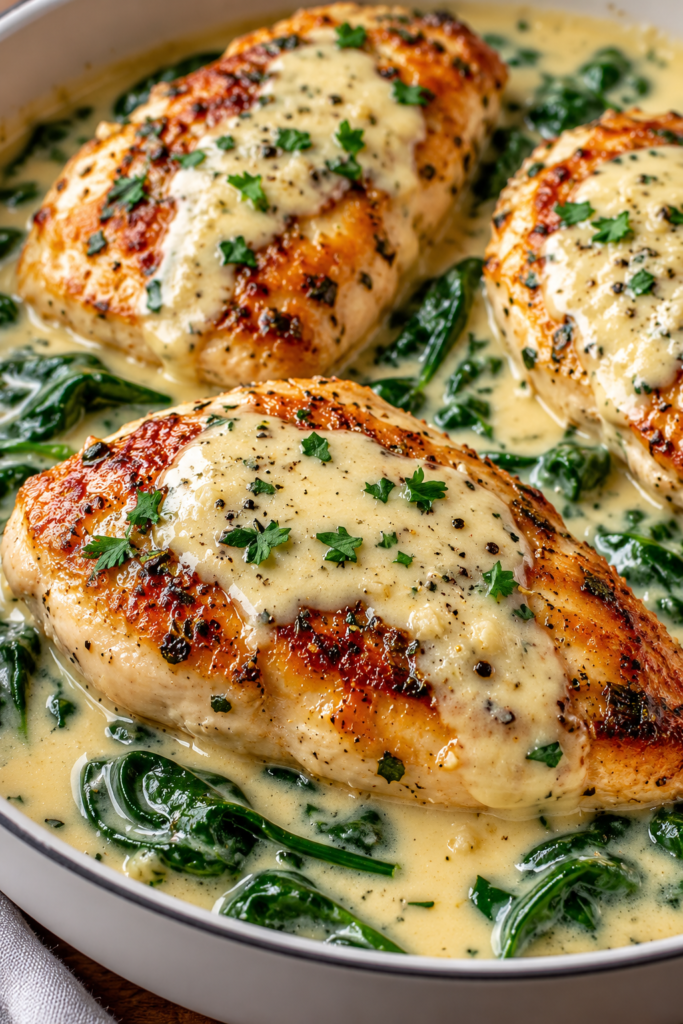
Chicken Florentine : Step-by-Step Cooking Instructions
Follow these simple steps to make tender, golden chicken breasts coated in a rich garlic Parmesan cream sauce with fresh spinach.
Prepare the Chicken
Pat the chicken breasts dry with paper towels. If they are thick, slice them horizontally into thinner cutlets or gently pound them to an even thickness.
In a small bowl, combine the salt, black pepper, and Italian seasoning. Sprinkle the mixture evenly over both sides of the chicken.
Place the flour in a shallow dish and lightly coat each chicken breast, shaking off any excess flour. This helps create a golden crust and gives the sauce something to cling to.
Sear the Chicken
Heat the olive oil and 1 tablespoon of butter in a large skillet over medium-high heat.
Once the butter has melted and the pan is hot, add the chicken in a single layer. Cook for approximately 4–6 minutes per side, depending on thickness, until golden brown.
The chicken does not need to be fully cooked at this stage because it will finish cooking in the sauce.
Transfer the chicken to a clean plate and set aside.
Tip: Avoid overcrowding the skillet. Cook in batches if necessary to ensure the chicken browns instead of steaming.
Sauté the Garlic
Reduce the heat to medium and add the remaining 2 tablespoons of butter to the same skillet.
Once melted, add the minced garlic and sauté for approximately 30–60 seconds, stirring frequently until fragrant.
Scrape up the browned bits from the bottom of the skillet as you stir. These flavorful bits will add depth to the creamy sauce.
Be careful not to burn the garlic, as it can become bitter.
Add the Chicken Broth
Pour the chicken broth into the skillet, stirring gently to combine it with the garlic and browned bits.
Allow the broth to simmer for about 2 minutes, giving it time to reduce slightly and concentrate its flavor.
Use a wooden spoon or spatula to loosen any remaining browned bits from the bottom of the pan.
Make the Creamy Parmesan Sauce
Reduce the heat to medium-low and slowly pour in the heavy cream, stirring continuously.
Let the mixture simmer gently for 2–3 minutes until it begins to thicken slightly.
Add the freshly grated Parmesan cheese and stir until it melts into the sauce. Season with additional salt and black pepper if needed.
Keep the sauce at a gentle simmer rather than a rapid boil. This helps maintain a smooth, creamy texture.
Add the Spinach
Add the fresh baby spinach to the skillet in handfuls, stirring as each addition begins to wilt.
Cook for approximately 1–3 minutes, until the spinach has softened and is evenly distributed throughout the sauce.
If using frozen spinach, make sure it has been thawed and squeezed dry before adding it. Excess moisture can make the sauce watery.
Return the Chicken to the Skillet
Place the seared chicken breasts back into the skillet, nestling them into the creamy spinach sauce.
Spoon some sauce over each piece of chicken, then let everything simmer gently for approximately 3–6 minutes, or until the chicken is fully cooked.
Check the thickest part of each piece with a meat thermometer. The chicken should reach an internal temperature of 165°F (74°C).
If the sauce becomes too thick, add a small splash of chicken broth and stir until it reaches your preferred consistency.
Add the Finishing Touches
Remove the skillet from the heat and stir in the optional lemon juice. A small amount brightens the creamy sauce and balances its richness.
Taste the sauce and adjust the seasoning if necessary.
Sprinkle freshly grated Parmesan, chopped parsley, or a pinch of red pepper flakes over the dish for extra flavor and color.
Serve and Enjoy
Serve the Chicken Florentine immediately while the chicken is hot and the sauce is creamy.
Spoon plenty of spinach and Parmesan sauce over each chicken breast. Pair it with mashed potatoes, rice, pasta, roasted vegetables, or crusty bread to soak up the delicious sauce.
For an especially satisfying meal, serve it over fettuccine or alongside garlic bread.
Troubleshooting Tips
Why Is My Cream Sauce Too Thin?
Let the sauce simmer gently for a few additional minutes to reduce. You can also add a little more finely grated Parmesan, stirring until it melts.
Why Is My Sauce Grainy?
The heat may be too high, or the cheese may not be melting smoothly. Lower the heat before adding Parmesan and stir it in gradually.
Why Is My Chicken Dry?
Chicken breasts can dry out when overcooked. Use evenly sized pieces and check the internal temperature rather than relying only on cooking time.
Why Is My Sauce Too Thick?
Stir in a small amount of warm chicken broth until the sauce reaches the desired consistency.
Can I Make the Sauce Without Flour?
Yes. Skip the flour coating and sear the seasoned chicken directly in the oil and butter. The sauce may be slightly thinner, so allow it to simmer gently until it reaches your preferred consistency.
Can I Use Frozen Spinach?
Yes. Thaw it completely and squeeze out as much water as possible before adding it to the sauce.
Final Tips for Perfect Chicken Florentine
- Pat the chicken dry before seasoning and coating it.
- Sear the chicken until golden for better flavor.
- Cook garlic briefly to prevent bitterness.
- Add Parmesan over gentle heat.
- Drain frozen spinach thoroughly if using it.
- Cook the chicken to 165°F (74°C).
- Serve immediately for the best sauce texture.
Chicken Florentine : Serving, Storage, Variations, and FAQs
How to Serve Chicken Florentine
Creamy Chicken Florentine is a satisfying main course that pairs beautifully with pasta, potatoes, rice, and fresh vegetables. The garlic Parmesan sauce is rich and flavorful, making it perfect for spooning over your favorite side dishes.
Here are some delicious serving ideas:
- Fettuccine or linguine: Serve the chicken over pasta to enjoy every bit of the creamy spinach sauce.
- Mashed potatoes: Pair it with buttery mashed potatoes for a comforting family dinner.
- Steamed rice: Fluffy white or brown rice absorbs the flavorful sauce beautifully.
- Roasted vegetables: Serve with roasted broccoli, asparagus, carrots, or green beans for a balanced meal.
- Garlic bread: Use crusty bread to soak up the creamy Parmesan sauce.
- Cauliflower rice: Choose cauliflower rice for a lighter, vegetable-based accompaniment.
For an elegant presentation, place one chicken breast on each plate, spoon the spinach cream sauce over the top, and finish with freshly grated Parmesan and chopped parsley.
How to Store Chicken Florentine
Proper storage helps preserve the chicken’s tenderness and the sauce’s flavor.
In the Refrigerator
Allow leftovers to cool slightly, then transfer them to an airtight container. Refrigerate within 2 hours of cooking and consume within 3–4 days.
Store the chicken together with the sauce to help prevent it from drying out.
In the Freezer
You can freeze Chicken Florentine, although cream sauces may separate slightly after thawing.
For best quality:
- Allow the dish to cool.
- Divide it into individual portions.
- Place the portions in freezer-safe airtight containers.
- Freeze for up to 2 months for the best texture.
- Thaw overnight in the refrigerator before reheating.
If you plan to freeze the dish specifically for meal preparation, you may prefer to add freshly cooked spinach after thawing and reheating.
How to Reheat Chicken Florentine
On the stovetop: Place the chicken and sauce in a skillet over low to medium-low heat. Add a splash of chicken broth or cream and cover loosely. Heat gently, stirring the sauce occasionally, until the chicken reaches 165°F (74°C).
In the microwave: Place a portion in a microwave-safe dish and cover loosely. Heat in short intervals, stirring the sauce when possible, until thoroughly hot.
Avoid boiling the sauce during reheating, as high heat can cause it to separate.
Delicious Chicken Florentine Variations
1. Chicken Florentine with Mushrooms
Add 8 ounces (225 g) of sliced mushrooms to the skillet after removing the chicken. Sauté until golden and their moisture has evaporated, then continue with the garlic and sauce.
The mushrooms add an earthy flavor that complements the spinach and Parmesan.
2. Chicken Florentine with Sun-Dried Tomatoes
Stir ¼ cup of chopped, drained sun-dried tomatoes into the sauce before adding the spinach. Their sweet, tangy flavor creates a delicious contrast with the creamy sauce.
3. Chicken Florentine Pasta
Slice the cooked chicken and toss it with cooked fettuccine, penne, or linguine. Add a little reserved pasta water if needed to help the sauce coat the noodles evenly.
4. Lighter Chicken Florentine
Replace some of the heavy cream with additional chicken broth or use half-and-half. The sauce will be less rich and may require a little extra simmering to thicken.
5. Spicy Chicken Florentine
Add a pinch of red pepper flakes when sautéing the garlic. This gives the creamy sauce a gentle heat without overpowering the other flavors.
6. Chicken Florentine with Mozzarella
Sprinkle a small amount of shredded mozzarella over the chicken during the final minutes of cooking. Cover the skillet briefly to help the cheese melt.
This variation creates an extra-cheesy finish while keeping the classic spinach cream sauce.
Frequently Asked Questions
What Does Florentine Mean in Cooking?
In culinary terminology, Florentine generally refers to dishes prepared with spinach, often served with a creamy sauce. Chicken Florentine is a popular American interpretation featuring chicken, spinach, and a rich sauce.
Can I Use Chicken Thighs Instead of Chicken Breasts?
Yes. Boneless, skinless chicken thighs work well and tend to remain juicy. Adjust the cooking time according to their size and thickness, and ensure they reach an internal temperature of 165°F (74°C).
Can I Make Chicken Florentine Ahead of Time?
Yes. You can prepare the dish in advance and refrigerate it in an airtight container. Reheat gently on the stovetop with a splash of broth or cream. For the freshest spinach texture, you can also prepare the chicken and sauce first and add the spinach shortly before serving.
Can I Use Frozen Spinach Instead of Fresh?
Yes. Frozen spinach is convenient and works well in the sauce. Thaw it completely and squeeze out excess moisture before adding it to the skillet.
How Do I Thicken the Cream Sauce?
Allow it to simmer gently for a few minutes to reduce. You can also add a little extra Parmesan cheese. Avoid adding too much cheese at once, as this may make the sauce overly thick or salty.
Can I Make Chicken Florentine Without Heavy Cream?
Yes. Half-and-half is a convenient alternative, although the sauce will be thinner. Another option is to use a small amount of cream cheese blended with broth for a creamy consistency.
Is Chicken Florentine Suitable for Meal Prep?
Absolutely. Divide the cooked chicken and sauce into individual airtight containers and refrigerate for up to 3–4 days. Store pasta or other side dishes separately when possible to preserve their texture.
Expert Tips for the Best Chicken Florentine
- Use evenly sized chicken breasts for consistent cooking.
- Sear the chicken until golden before preparing the sauce.
- Use freshly grated Parmesan for a smoother finish.
- Keep the cream sauce at a gentle simmer.
- Add spinach near the end to prevent overcooking.
- Taste the sauce before adding extra salt because Parmesan and broth can already be salty.
- Serve immediately for the creamiest texture.
Final Thoughts
Chicken Florentine is a delicious way to transform everyday chicken breasts into a comforting, restaurant-style dinner. Tender chicken, fresh spinach, garlic, and Parmesan come together in a creamy sauce that feels special without requiring complicated cooking techniques.
Serve it over pasta, alongside mashed potatoes, or with crusty garlic bread for a satisfying meal the whole family can enjoy. With simple ingredients and plenty of opportunities to customize the flavors, this creamy Chicken Florentine recipe deserves a place in your regular dinner rotation.